Ustadi Hamsah
(The first of two articles)
Indonesia, often referred to by its cultural name, Nusantara, describes a vast region situated between two oceans and two continents, specifically in Southeast Asia. This term highlights the diversity of various ethnic groups, religions, cultures, and customs that coexist with a common purpose. The notion of unity in diversity is encapsulated in the words of Mpu Tantular, who, in his work Sutasoma (1370 AD), famously stated, "bhinneka tunggal ika tan hana dharma magrwa," which translates to "diverse but united; no power can weaken it." This concept predates the motto "e pluribus unum" (out of many, one) found on the Great Seal of the United States, which was created by Charles Thomson in 1732 AD. However, Mpu Tantular's depiction of diversity is still more recent than the narratives of diversity expressed in the Qur'an, dating back to the 7th century AD.
The Symbolism of Diversity in Noah's Ark
Given Indonesia’s highly diverse and complex background, one might initially imagine a “chaotic,” “crowded,” and utterly disordered society. However, this is far from the reality found in the archipelago. On the contrary, what emerges is a harmonious life, rich in the spirit of mutual cooperation (gotong royong), and far from hostile attitudes in the face of differences, all embodied in the spirit of bhinneka tunggal ika (unity in diversity). This social condition resonates with the Qur’anic description of the atmosphere aboard “Noah’s Ark” (safinah Nuḥ)
Continue reading “Studi Agama & Nalar Keragaman di Indonesia (1)” →

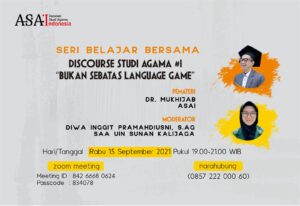 Mengharap kehadiran Ibu/Bapak/Ibu/Sdr/i dalam Seri Belajar Bersama Discourse Studi Agama#1: “Bukan Sebatas Language Game” bersama Dr. Mukhijab, pada:
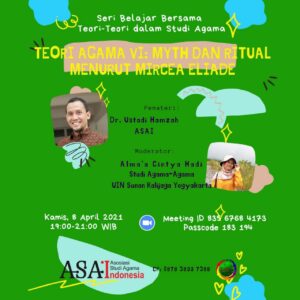 Manusia modern seringkali terperangkap terhadap yang visible. Fenomena yang tidak disaksikan oleh panca indra, dianggap sebagai mustahil. Yah, itu hanya mitos.
 English (UK)
  Bahasa Indonesia