
Oleh :
Muryana, S.Th.I., M.Hum.
(Asosiasi Studi Agama Indonesia)
In mid-December 2023, I was asked to respond to the book "Interreligious Studies: Methods and Practices," written by Zainal Abidin Bagir and others. The book features 11 chapters authored by 10 men and 1 woman. My understanding of the book highlights two key points. First, it emphasizes the differences in methodology among Comparative Religion, Religious Studies, and Interreligious Studies. Second, it addresses how programs in Comparative Religion, Religious Studies, and Interreligious Studies are managed at universities.
I gathered insights from three important writings. The first is by Zainal A. Bagir, who emphasizes that Interreligious Studies should be viewed as a branch of religious studies. The second writing, by Nur Ichwan, discusses the approach of Religious Studies at IAIN/UIN Sunan Kalijaga Yogyakarta, which leans towards Methodological Agnosticism. The third piece, authored by Robert Setio, explores the concept of Contextual Theology in Interreligious Studies. These three articles prompted me to ask some critical questions: "What is the difference between religious studies at UIN and UGM?" and "What should Comparative Religion, Religious Studies, and Interreligious Studies focus on next?" I found some answers in an additional eight articles.
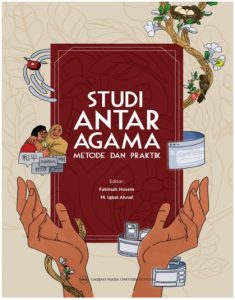
The eight writings include Robert Setio's analysis of the practical benefits of these studies for graduates' careers. Bernard Adeney-Risakotta's work discusses interreligious studies with a focus on respecting the diversity of religion and theology. Frans Wijsen explores the five shifts in religious studies within a discourse framework. Daniel K. Listijabudi offers insights into hermeneutics as applied to interreligious studies. Ricardo Vargas Posada maps dissertations produced by students in the Interfaith Studies program. Mohammad Iqbal Ahnaf emphasizes the importance of religious literacy for a better understanding of religion. Izak Y.M. Lattu and Faitmah Husein examine the role of dialogue in fostering social cohesion. Lastly, Leonard C. Epafras questions the concept of religious authority and explores how divine power has shifted in the context of "Religion for Adsense" in the digital age. Through these writings, I've discovered that the management of Comparative Religion, Religious Studies, and Interreligious Studies significantly influences the success of interreligious cooperation. A key determinant is the institution under which these studies are organized, whether it is a religious or non-religious institution. This factor affects whether students from diverse religious backgrounds feel comfortable and can thrive in their studies. Consequently, experiences related to comparative religion, religious studies, and interfaith studies are systematically imparted to students, potentially enriching their perspectives. In this context, I observe the success of the Indonesian Consortium for Religious Studies (ICRS), UGM in promoting itself as a reputable doctoral program for those interested in studying interfaith issues. However, I do believe it is problematic to directly compare the learning experiences of undergraduate students at UIN with those of doctoral students at UGM.
 English (UK)
  Bahasa Indonesia