
Prof. Dr. Media Zainul Bahri
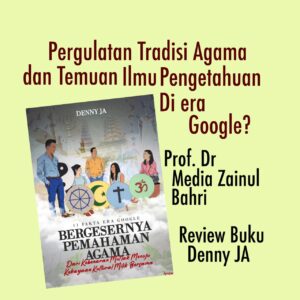 RELIGION IS A TRADITION, understood as something that is believed, practiced, and interpreted by humans. We cannot verify whether angels or God themselves adhere to a religion. While sacred texts suggest that angels or jinn engage in worship, this is not something we can observe with our senses; it remainsunobservableOnly humans, with all their complexities, are visibly seen to believe in, understand, and practice religion, passing it down through generations over centuries. This is what we refer to as “tradition” orreligious tradition).
The tradition evolved over time, becoming increasingly complex due to the close relationship between religious texts and their cultural context, which includes aspects such as culture, economy, and politics. Additionally, the social dynamics between religious individuals and the interactions between religious and non-religious people contributed to this development.
Jika para ilmuwan Eropa sejak masa modern, terutama di abad 19 Masehi, menyebut agama—bersama-sama dengan institusi pendidikan, birokrasi, negara, pariwisata, ekonomi dan lain-lain– sebagai “penemuan manusia”, saya lebih suka menyebut agama sebagai tradisi. Agama-agama yang hidup (living religions), yang awal kemunculannya banyak meminjam “tradisi lokal” di tempat agama itu lahir, kini ikut mengembangkan tradisi umat manusia. Continue reading “Agama Adalah Tradisi”
 Anxiety is evident on the faces of children across the nation during the COVID-19 pandemic, which began in 2019 and has spread globally, infecting millions and resulting in hundreds of thousands of deaths. It is understandable that such expressions of worry arise; during the pandemic, the burden of life has increased for everyone. In summary, social issues are weighing heavily on our hearts and minds. The economy appears to have collapsed, with shops and malls closed, and online motorcycle taxi services have also been affected. Every aspect of life is entwined with the overwhelming anxiety surrounding this crisis.
 Humans are remarkably fragile. The arrogance shown in managing and exploiting nature is
being challenged
Humans are remarkably fragile. The arrogance shown in managing and exploiting nature is
being challenged This article seeks to assert that Covid-19 (Coronavirus Disease 2019) is a major factor capable
of altering the fundamental patterns and structures of life within global communities. To
support this assertion, the article describes the changes in society brought about by the
influence of the virus. I refer to this examination of the impact of Covid-19 on social dynamics
as "SocioVirology." SocioVirology is a theoretical framework that posits that viruses (microbes)
can serve as primary determinants of social change within society.
This article seeks to assert that Covid-19 (Coronavirus Disease 2019) is a major factor capable
of altering the fundamental patterns and structures of life within global communities. To
support this assertion, the article describes the changes in society brought about by the
influence of the virus. I refer to this examination of the impact of Covid-19 on social dynamics
as "SocioVirology." SocioVirology is a theoretical framework that posits that viruses (microbes)
can serve as primary determinants of social change within society.
 English (UK)
  Bahasa Indonesia