
Alma’a Cinthya Hadi
The government has implemented various measures and policies in response to the COVID-19 pandemic. These measures include recommendations for social distancing (which later evolved into physical distancing), working from home, and enforcing Large-Scale Social Restrictions (PSBB). Individuals who need to go outside are required to wear masks, wash their hands with soap, and thoroughly clean themselves upon returning home. The COVID-19 pandemic has compelled people to adapt to a new way of life that differs significantly from their usual routines.
The mosque is one of the places directly affected by the PSBB policy. Mosques, which are typically used as gathering spots for worship, are particularly vulnerable to becoming sites for the transmission of Covid-19. This vulnerability led to appeals and prohibitions advising people to temporarily suspend Friday prayers and instead perform Dhuhur prayers. Additionally, individuals were encouraged to conduct tarawih prayers and Eid prayers at home, as recommended by the Ministry of Religion, Muhammadiyah, and Nahdlatul Ulama (NU). However, not all Indonesian Muslims, especially regarding Friday prayers, immediately complied with the directives issued by the Ministry of Religion and the two largest Islamic organizations in Indonesia.
Mosques During the Pandemic
Many Muslims probably never imagined that there would come a time when they would be unable to gather for worship in the mosque. However, this is the reality they are facing now, due to a small virus commonly known as the coronavirus. The mosque, which serves as a place to nurture and strengthen faith, has had to be temporarily abandoned. The duration of this abandonment remains uncertain. Religion can be understood as a "cultural system" that encompasses symbols, traditions, and beliefs, which are continuously preserved to foster strong feelings and motivations by connecting these concepts to tangible experiences as unique realities (Geertz, 1992). Referring to Clifford Geertz's viewpoint that religion functions as a cultural system, temporarily refraining from attending the mosque signifies a break with the "old" values that are continually preserved through the process of inheritance.
The difficulty of choosing not to attend the mosque can be illustrated by a phenomenon observed in a village in West Java. The congregation exhibited three responses to the appeal to refrain from participating in Friday prayers. The first response was compliance: some members did not attend Friday prayers and adhered to the appeals made by the government and religious organizations, recognizing that this decision was temporary and aimed at protecting the community from the dangers of COVID-19.
They hold their prayers once every three weeks. This group seeks to balance their obedience to the government with their commitment to their religious beliefs. They believe that not participating in Friday prayers would label them as hypocrites. Therefore, they choose to perform Friday prayers every three weeks to uphold their faith while adhering to governmental regulations.
Third, this group continues to hold Friday prayers as usual, seemingly unaffected by the COVID-19 outbreak. They express little concern about the virus, believing that life and death are predetermined by Allah. "Fear only Allah, not COVID," they say. They even argue that the government's measures are designed solely to keep people away from the mosque. For example, a message that went viral in several WhatsApp groups questioned, "Why are only mosques closed, along with Friday prayers and congregational worship, while markets, malls, and other venues remain open?"
Revitalizing Mosques as Centers of Civilization
If COVID-19 persists for an extended period, do Muslims still need mosques? This question leads me to consider a concept that is currently popular in society: the "new normal." This refers to the post-epidemic situation that alters old habits. Policies like social distancing, which have been in place for a long time, are likely to fundamentally change societal views on "gathering."
Long before the outbreak and the emergence of guidelines for managing it, Kuntowijoyo addressed the decline of religious authority among its followers in his book, “Muslims Without Mosques”. Even prior to the COVID-19 pandemic, the authority of traditional religious leaders was being supplanted by the influence of celebrity ustadz in cyberspace, particularly on social media. People began seeking religious information on platforms like YouTube, where the accuracy of the content is often unverifiable. This trend indicates a deterioration of the mosque’s role as a central religious institution. Furthermore, if we consider John O. Voll's Theory of Continuity and Change, it suggests that Muslims risk losing their intellectual lineage, which has traditionally served as a standard for validating knowledge in Islamic boarding schools, an instrumental means of spreading Islam after the mosque.
The sacredness of a mosque will diminish if it is solely viewed as a place for ritualistic worship without incorporating the concept of ihsan, which recognizes that God observes all our actions. If worship performed in the mosque is motivated merely by fear of sin or the consequences of going to hell, rather than a genuine spiritual need, this creates a disconnect between religious rituals and spirituality. Such a separation can significantly impact the mosque's sustainability. Mosques that only offer repetitive activities, like religious studies centered on the same themes of halal and haram, are likely to be neglected over time, as they fail to fulfill the spiritual needs of their congregation.
On the other hand, the conditions described above serve as a form of self-criticism for academics and religious figures who have focused on lofty religious concepts rather than addressing the practical needs of people at the grassroots level. This might explain why the religious landscape in Indonesia has not matured. Religious narratives tend to emphasize halal-haram aspects of Sharia, often neglecting the importance of love and compassion for others. There is an overemphasis on warnings and threats, while advice to engage reason through the advancement of science, economy, and civilization which are essential for societal well-being, remains minimal. Ultimately, the essence of religion lies in its ability to foster happiness, prosperity, and the alleviation of suffering. Therefore, during the pandemic and in the post-outbreak period, now is the ideal time to conceptualize a "new mosque" as a center for the development of civilization.
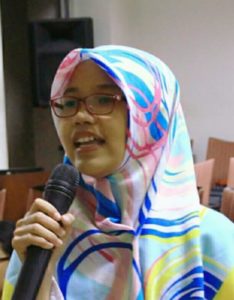
Written by: Alma’a Cinthya Hadi. She is Student of the Departement of Religious Studies, Faculty of Ushuluddin and Islamic Thougt, UIN Sunan Kalijaga Yogyakarta

 English (UK)
  Bahasa Indonesia
Selamat mbak alma